I AM PLEASED to report that Work of Human Hands has received its first formal review in a periodical. This came in a lengthy piece by Dr. Geoffrey Hull in the October 2010 issue of Christian Order. One advantage of the Internet age is the opportunity it offers an author to engage with and respond to points raised by reviewers. In the case of Dr. Hull’s lengthy and thoughtful review, this will be a pleasure.
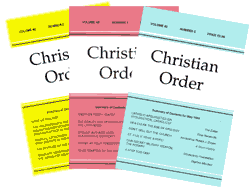 PERIODICAL: Christian Order was founded in England in 1959 by Father Paul Crane SJ. In the years following Vatican II, Christian Order promoted resistance to the liturgical changes and fidelity to the old Mass, and described its mission as battling the efforts “of the Modernist revolutionaries and their manic efforts to protestanize the faith anew” in the “the liturgical, doctrinal, moral, catechetical and ecumenical fields.”
Apart from editorials, Christian Order does not put its content on-line. For information on ordering the number which contains Dr. Hull’s review, or to subscribe to Christian Order (for U.S., $50 for ten editions per year) click here.
REVIEWER: Dr. Geoffrey Hull is an Australian linguist, ethnologist, historian and professor at Macquarie University, Sydney.
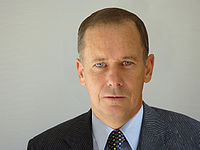
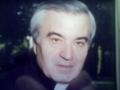
Dr. Geoffrey Hull
Professor Hull is also the author of The Banished Heart: Origins of Heteropraxis in the Catholic Church, a study of the historical causes and socio-cultural impact of church reforms of the 1960s in the Roman Catholic and Eastern Catholic traditions. A second edition of Banished Heart was published in 2010 by T&T Clark (London) as part of its series Studies in Fundamental Liturgy.
THE REVIEW: Dr. Hull’s review is rather extensive (11 pages). He takes his duty as a reviewer seriously: he strives to represent the content of WHH concisely, accurately and fairly, and to balance positive and the negative parts of his analysis. His tone is academic, rather than polemic, a refreshing contrast to so much traditionalist writing.
The first obstacle that many traditionalists must overcome before reading almost anything I have written is that I am a sedevacantist. I begin Work of Human Hands with this very point, and Dr. Hull addresses it in his opening paragraph.
When I agreed to review Rev. Anthony Cekada’s latest study Work of Human Hands: A Theological Critique of the Mass of Paul VI, I was aware that many readers of Christian Order would hesitate to open a book written by a sedevacantist… And as the reviewer of this book I wish to state for the record that I am no supporter of the sedevacantist thesis or of the mission of its proponents.
Nevertheless, in his preface Fr Cekada states that his topic is not sedevacantism but the Roman liturgical reform, and although latter-day traditionalist cynicism might make it hard to suspend the judgement that the two subjects can hardly be unrelated in the mind of a writer so given to systematic thought, I think it only fair to evaluate the work more for what it purports to be rather than for what it might seem to imply…
I. Positive Observations. From this Dr. Hull proceeds to a number of positive general observations about Work of Human Hands:
Cekada’s latest offering is well documented and based on an impressive amount of background reading evidenced by its extensive bibliography.…
Both parts naturally go over ground already covered by other writers and scholars who have attempted to assess the extent to which the new liturgy has departed from organic ritual development and compromised Catholic doctrine in the interests of ecumenical convergence with Protestantism: the thought of Louis Salleron, Michael Davies, Klaus Gamber, Didier Bonneterre and others has been well pondered and economically synthesized by the author. But what makes Anthony Cekada’s study original and worthy of attention are those pages where he goes into a deeper analysis of particular aspects of the liturgical revolution that have so far been dealt with in only a cursory fashion.
Dr. Hull points out and sums up for the reader the two key chapters in which I analyze the theological underpinnings for the Mass of Paul VI:
Particular cases in point are his excellent Chapters 5 and 6, examining the protestantizing doctrinal innovations that informed the 1969 General Instruction on the New Mass, and the skullduggery resorted to by Vatican officials in their attempt to salvage and repackage the document after its orthodoxy was brought into question by Cardinals Ottaviani and Bacci. The author’s reflections on the expunging of references to the Mass as a sacrifice of propitiation in the Instruction are most interesting, as is his analysis of the new interpretations of Christ’s presence in the Eucharist, and of the roles of priest and congregation…
Of the Chapter 4, which deals with the vernacular translations of the New Mass that conservatives have so severely criticized over the years, Dr. Hull says:
Another valuable insight provided by this book (pp. 92–9) is evidence that in several instances, for example, the foisting of poor and erroneous vernacular translation of Latin liturgical texts on local churches, responsibility lay with the Vatican bureaucracies working under the Pope, not with the episcopal conferences who usually get the blame in polemic literature…
In Chapter 1 of Work of Human Hands and again in my conclusions, I point out the dangers of reducing the question of old Mass vs. New Mass to one of aesthetics, nostalgia or a vague “hunger for mystery” in religion. I argue that the main reasons for rejecting the New Mass and embracing the old must be Catholic doctrine and piety.
On this point Dr. Hull is in complete accord.
I could not agree more with [Fr. Cekada’s] criticism of the modern Vatican’s plainly dishonest endorsement of the immemorial rite on primarily aesthetic grounds. Such grounds are diametrically opposed to (and designed to sweep under the carpet) the weighty doctrinal considerations that have motivated intelligent traditionalist dissent from the reform ever since the 1960s.
Another important observation, made on pp. 5–7, concerns the gagging of traditionalist opinion demanded by a conscientious acceptance of the terms of the indults of 1988 and 2007. The Vatican strategy of subjectively portraying fidelity to the immemorial rite “as mere personal preference or sentiment” was, Cekada writes, “ extremely clever. It sidestepped the doctrinal question — it’s all just choice and options. And if you suspect there may be a problem, please don’t be so ungrateful to the Holy Father as to mention it…”
Here Dr. Hull offers a personal anecdote about priests who had had begun to celebrate the traditional Mass under the auspices of the new, Vatican-approved priestly societies established under John Paul II in 1988:
This reminds me of a conversation I had in the late 1980s with the superior of the newly-formed Fraternity of St. Peter. I asked the priest in question whether [it] was true that accepting the terms of the Ecclesia Dei decree [of John Paul II] meant being unable to criticize the liturgical revolution still approved by the Vatican. “Oh, enfin…” [“Oh, well…”] was his evasive reply, and after a short, embarrassed silence he changed the subject.
“The elephant which I had led into the room,” Dr. Hull continues, was that the New Mass was a “dangerous aberration,” and that putting it on the same level as the traditional Mass “in the interests of a spurious unity of faith based on post-conciliar, Anglicanoid pluralism is totally unacceptable,” because “in the orthodox universe there are no such things as ‘extraordinary’ and ‘ordinary’ forms of the Roman rite.”
Summing up on this issue, Dr. Hull concludes:
Fr. Cekada rightly recognizes that just as truth and error cannot be wed, no convergence of authentic worship and an artificial cult is possible, and talk of a “reform of the reform” is a mere delusion, whether it come from the lips of the Supreme Pontiff or from someone lower down the chain of command. That the Pauline liturgy needs to be officially repudiated and abolished in the Roman rite is the logical — and impeccably orthodox — conclusion of the book,
Dr. Hull’s review appeared in Christian Order immediately after an editorial on the New Mass that concluded with the phrase delenda est — it must be destroyed. This, as it happens, was also the title for the final section in my conclusions at the end of Work of Human Hands.
II. Criticisms: Some of the offenses alleged fall into the venial category. Work of Human Hands, Dr. Hull concedes, “certainly never suffers from dullness.” That said,
Anthony Cekada is an engaging and entertaining writer, but his penchant for the witty aside is somewhat over-indulged in what sets out to be a work of objective scholarship. This sometimes leads him to descend into populist rhetoric…
In a purely academic context, Dr. Hull is of course quite correct. Work of Human Hands, however, was also aimed at a broader audience — not only the intellectual or the liturgy buff, but also the average Joe in the pew at a traditionalist chapel, who tends not to read many books and who (my experience as a parish priest tells me) appreciates a few extra rhetorical flourishes here and there when he does. It is for his benefit that Father Chuck and Ms. Gauleiter make an occasional appearance.
Dr. Hull points out three instances of inaccurate terminology in a footnote (p. 88, n. 16) discussing various liturgical languages. Two of the three instances are based on my source (De Marco, Rome and the Vernacular, 45, 81), but since Dr. Hull is eminent linguist in the field of Romance, Celtic, Slavonic, Semitic, Austronesian and Papuan languages, one must naturally defer to his expertise.
Other points in the book to which Dr. Hull takes exception touch upon more complex issues:
(1) Invalidity?. The thesis of Work of Human Hands deals with the disastrous effects of the New Mass on Catholic doctrine and piety. The issue of the validity or invalidity of the new rite I treat in a somewhat ancillary fashion at the end of Chapter 12 (see pp. 346–8)
Put roughly, my argument is this: (a) According to the traditionally accepted principles of Catholic sacramental theology, to recite the Words of Consecration (or “sacramental form”) at Mass in a narrative mode manifests a defect of intention that would render the consecration invalid. (b) In the official liturgical text of the New Mass itself, the Words of Consecration (Verba Consecrationis) have been changed from a true sacramental form into a quote (Verba Domini, as the new rubrics and Paul VI’s Apostolic Constitution say) in a historical narrative. (c) The conclusion based on (a) and (b) is invalidity.
Dr. Hull is of the opinion that, to arrive at this conclusion, I would need to prove that modern priests habitually and deliberately read the Words of Consecration this way.
But the problem I see lies not with the individual priest, but with the official liturgical text itself. The priest just takes what the official rite gives him, and as I demonstrate by examining this rite, it gives him a narrative with a quote. (See pp. 337–45) Applying the major principle (a) leaves only one conclusion.
Deliberately abandoning the traditional principles of sacramental theology in the formulation of a new rite, as the reformers did, was bound to have terrible consequences, and this, I contend, is one of them.
(2) Modernist or ‘modernist’? While Dr. Hull acknowledges the subversive activities of the New Theology (an anti-Thomist movement which emerged in the 1930s and which would triumph at Vatican II), he believes that I have not clearly set “terminological parameters” in applying the term “modernist” to its adherents. In some cases (Küng and Schillebeeckx), he believes, it applies; in others, he believes it does not — notably that of Father Louis Bouyer.
His exception for the case of Bouyer, I think, is rooted in the general inclination among traditionalists (e.g. Michael Davies, and many who are now promoting the old Mass under the banner of Summorum Pontificum) to claim Bouyer as an ally of their cause, due to his caustic comments after the Council about how some of the liturgical reforms actually turned out. (These are found in Liturgy and Architecture and The Decomposition of Catholicism.)
The perception needs to be revised. He who undertakes a reading of Bouyer’s 1954 Liturgical Piety while keeping one eye on Pascendi will see all the usual modernist sleight-of-hand: brutal dismissal of the ages of faith, praise for heretics (Brilioth, Jubé, Anglicans), “surpassing” standard Catholic theological terminology, attacks on the Real Presence, hatred for Thomism, and everywhere, endless rhetorical zigzagging to camouflage his real ideas from too close a scrutiny. All of this, I contend, I have amply documented on pp. 32–40 of Work of Human Hands.
As regards Dr. Hull’s more general terminological objection to my characterizing adherents of the New Theology as “modernists,” I respond that the label was employed not only by their own more orthodox contemporaries (to the question “Where is the New Theology leading us?” the great Dominican neo-Thomist Garrigou-Lagrange replied, “back to modernism”) but also by their latter-day sympathizers (Jürgen Mettepenningen’s recently-published study, for instance, is entitled Nouvelle Théologie – New Theology: Inheritor of Modernism, Precursor of Vatican II.)
In light of the foregoing, it would seem that my “application of the damning label ‘modernist’ to most of the post-scholastic Latin liturgists and theologians” may be far less hasty than Dr. Hull seems to think.
(3) Contempt for the Catholic East. This, Dr. Hull contends, is my attitude towards Uniate Catholics. I will let the charge pass, and ask the reader of Work of Human Hands to form his own conclusions.
(4) Sedevacantist Shortcomings. Dr. Hull devotes only two paragraphs to this point. My “rough handling of non-Roman theological and liturgical traditions” seems to be “intimately bound up the general outlook of sedevacantists, which is excessively prone to abstraction in thought.” This results in
an exaggerated conception of papal power that makes grave errors of naturally fallible pontiffs outside the strict bound of guaranteed infallibility seem inconceivable, an attitude hardly supported by the evidence of Church history.
On the issue of whether my conception of papal power is exaggerated, or whether it indeed constitutes an excess forming part of what Dr. Hull calls “the author’s latinocentric sedevacantist baggage,” I will take a pass as well. This topic would take us far beyond what is, strictly speaking, the subject matter of Work of Human Hands.
III. Conclusion. Dr. Hull observes that no reviewer who, like himself, is also an author assumes that writing the perfect book is an easy task.
And while any thoroughgoing review of a book will inevitably appear more negative that positive because of the very nature of criticism, my concluding opinion is that there is much to commend in Work of Human Hands — a work I have found enlightening in many respects, in spite of the reservations I have expressed.
There is no doubt that a good deal of what Anthony Cekada has painstakingly chronicled and lucidly argued will make a very useful contribution the question that faces all orthodox Catholics today: how to restore integrity and holiness to the sanctuaries of our devastated churches.
I thank Dr. Hull and Christian Order for the opportunity to present and discuss these issues.
NOTE: Christian Order has since posted Dr. Hull’s review on line as its October Feature.